ARTICLE SUMMARY: As UX designers, our goal is to deliver the best UX experience possible. Anything less than your best will put your project in danger of failing.
One of the most important parts of the design process is having your work critiqued. In collaborative situations, this can become problematic, personalities and egos can become stumbling blocks. It can be difficult to avoid, but it’s necessary.
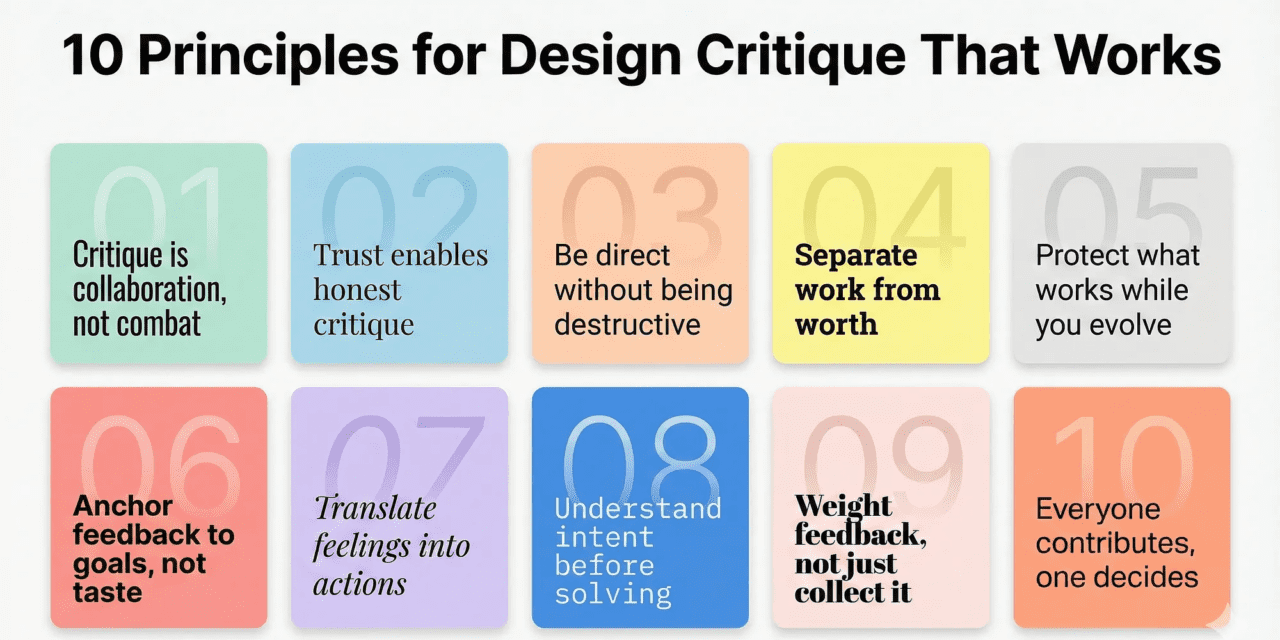
In “10 Principles For Design Critique That Actually Change Work,” Nurkhon draws from personal experience to examine the challenges of critiquing design in group settings, and how to avoid the common pitfalls that come with it. He talks about how;
- Critique Is a shared effort to make work better, not a battle to win
- Feedback with out clear reasoning is just personal preference dressed up as critique
- Gather input democratically, but assign one clear owner to make the final decision
When giving feedback, we need to be direct without being destructive. Say the real thing, cleanly. Avoid phrases like “this feels off” or “it’s confusing.” Those are reactions, not requests. Real critique does the extra work, it translates reactions into direction.
Hierarchy in design is strategic. It puts elements in order of importance and is essential to a project’s success. When collaborating on a design project, hierarchy within the team is just as important. Without a designated leader, critique can become an endless discussion. You need one person to keep the team moving in the right direction. While everyone contributes, it’s the person who has the final say that keeps the project moving forward on time.
This is a valuable read for anyone working in a collaborative team setting. Let us know what you think in the comments.