ARTICLE SUMMARY: Have you ever bought a large loaf of bread, used a couple of pieces here and there, and before you know it, it’s old and stale? It sat long enough to become part of the woodwork — and now it’s time for a new loaf.
Brands are essentially the same. They can grow old and stale, but they can also be refreshed, made relevant again. The goal here is to prevent that stagnation. If it does happen, it needs to be addressed quickly.
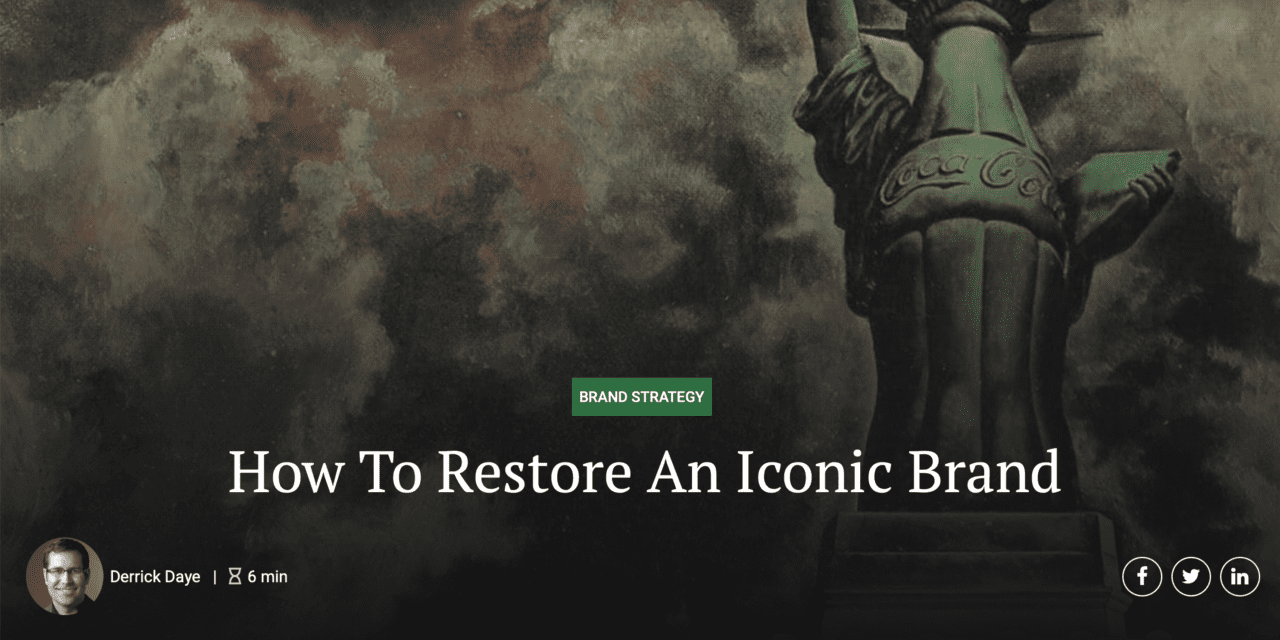
In Derrick Daye’s “How To Restore An Iconic Brand,” he examines what leads to an iconic brand’s decline, how to prevent it, and most importantly, how to bring it back to life. He talks about:
- What Is An Iconic Brand?
- Why Iconic Brands Lose Relevance
- How To Restore An Iconic Brand
If brands are going to endure they need to reinterpret their foundational meaning for new eras. During periods of disruption, stakeholders look for coherence — and strong brands provide it. Their reputation functions as strategic capital, guiding stakeholders toward brands that are associated with expertise, reliability, and authenticity.
Restoring an iconic brand takes more than a fresh coat of paint on an old house. It’s about renewing the brand’s meaning in the marketplace, updating the associations that drive preference, and rebuilding the reputation capital that underwrites long-term enterprise value. Iconic brands are well worth the recommitment.
Restoring iconic brands takes a lot of time and effort, and this article will guide you. Let us know what you think in the comments.